
How to Bill Insurance for JOBST Compression Stockings (A6531, Lymphedema Treatment Act & HCPCS Codes, 2026)
By Pro Therapy Supplies Editorial Team · Published September 23, 2026 · Last Reviewed September 23, 2026
Getting compression stockings covered by insurance is confusing — most articles still say “Medicare doesn’t cover them,” which stopped being the whole story on January 1, 2024. This guide walks you through both Medicare coverage pathways, the exact HCPCS and ICD-10 codes, what documentation you need, and how to avoid the denials that derail most claims.
This content is for educational purposes only and does not replace professional medical advice. Always consult a healthcare provider before starting compression therapy, especially at 20 mmHg or higher or if you have arterial disease, diabetes, or neuropathy. This content has not been reviewed by a licensed healthcare professional.
Graduated compression is not appropriate for everyone. People with peripheral arterial disease, uncontrolled heart failure, or certain skin/nerve conditions should not use compression without medical clearance.
Graduated compression means the garment applies the most pressure at the ankle, with pressure gradually decreasing up the leg. This pressure gradient is designed to support venous return — helping your veins push blood back toward the heart — and may help reduce swelling and leg heaviness. Compression levels are measured in mmHg (millimeters of mercury); 20 mmHg and above is generally a clinical decision to make with your provider.
Quick Answer: When Does Insurance Cover Compression Stockings?
Insurance may cover compression stockings in two main situations: (1) Medicare’s Surgical Dressings benefit when treating an open venous stasis ulcer (HCPCS A6531/A6532 with the AW modifier), and (2) the Lymphedema Treatment Act benefit, effective January 1, 2024, for diagnosed lymphedema. Private plans often cover 20–30+ mmHg garments with a prescription. Coverage varies by plan.
Key takeaways:
- Medicare covers compression garments through two narrow pathways — not for prevention, varicose veins, or travel.
- The Lymphedema Treatment Act made many lymphedema compression items a Medicare benefit starting January 1, 2024.
- Wrong HCPCS code choice is the #1 denial reason — the code must match the pathway.
- The fastest safe first step is a free coverage check before you order: check your coverage through our insurance verification form.
Which Insurance Plans Cover Compression Stockings?
Original Medicare covers compression garments only through two narrow pathways (stasis-ulcer surgical dressings and the 2024 lymphedema benefit). Medicare Advantage and most commercial plans — BCBS, Aetna, Cigna, UHC, Humana — may offer broader coverage with a prescription. Always verify your specific plan before ordering.
DME / DMEPOS stands for Durable Medical Equipment, Prosthetics, Orthotics, and Supplies. It’s the Medicare benefit category that covers medically necessary items like compression garments — but only when they’re prescribed for a covered condition and furnished by a Medicare-enrolled DMEPOS supplier. Payer policies vary by plan, so treat the table below as typical patterns, not promises.
| Payer | Typical Coverage | Patient Cost | Notes |
|---|---|---|---|
| Original Medicare (Part B) | Stasis-ulcer surgical dressings; lymphedema items (2024 benefit) | 2026 Part B deductible ($283) + 20% coinsurance | Only via the two pathways below |
| Medicare Advantage | Varies; often mirrors Medicare plus possible wellness compression | Plan copays apply | May be broader than Original Medicare |
| Blue Cross Blue Shield | Often covers 20–30+ mmHg with prescription & diagnosis | Deductible/copay per plan | Policies vary widely by state and plan |
| Aetna | Often covers gradient compression with documented diagnosis | Deductible/copay per plan | May follow Medicare pathway logic |
| Cigna | Often covers 20–30+ mmHg with prescription | Deductible/copay per plan | Prior authorization sometimes required |
| UnitedHealthcare | Often covers with prescription and clinical documentation | Deductible/copay per plan | Verify DME benefit specifically |
| Humana | Often covers per Medicare-like or broader criteria | Deductible/copay per plan | Medicare Advantage plans common here |
| TRICARE / VA | May cover with military/VA provider prescription | Low or no cost if authorized | Route through military treatment facility |
| Workers’ Comp | Often covers when injury-related, with documentation | Typically $0 if approved | Requires claim linkage |
| Medicaid | Varies by state; many cover with prescription | Minimal or no cost | Check your state program |
4 questions to ask the number on your insurance card:
- “Does my plan cover HCPCS code A6531 or lymphedema compression treatment items?”
- “Do I need a prior authorization, and is my supplier enrolled with you?”
- “What are my deductible and coinsurance for DME this year?”
- “Are there quantity or frequency limits per year?”
Does Medicare Cover Compression Stockings? Two Pathways Most People Miss
Medicare does not cover compression stockings for prevention, varicose veins, or travel — but it covers them through two narrow pathways: the long-standing Surgical Dressings benefit for open venous stasis ulcers, and the Lymphedema Treatment Act benefit, which began covering lymphedema compression garments on January 1, 2024.
Pathway 1 — Venous Stasis Ulcer: The Surgical Dressings Benefit
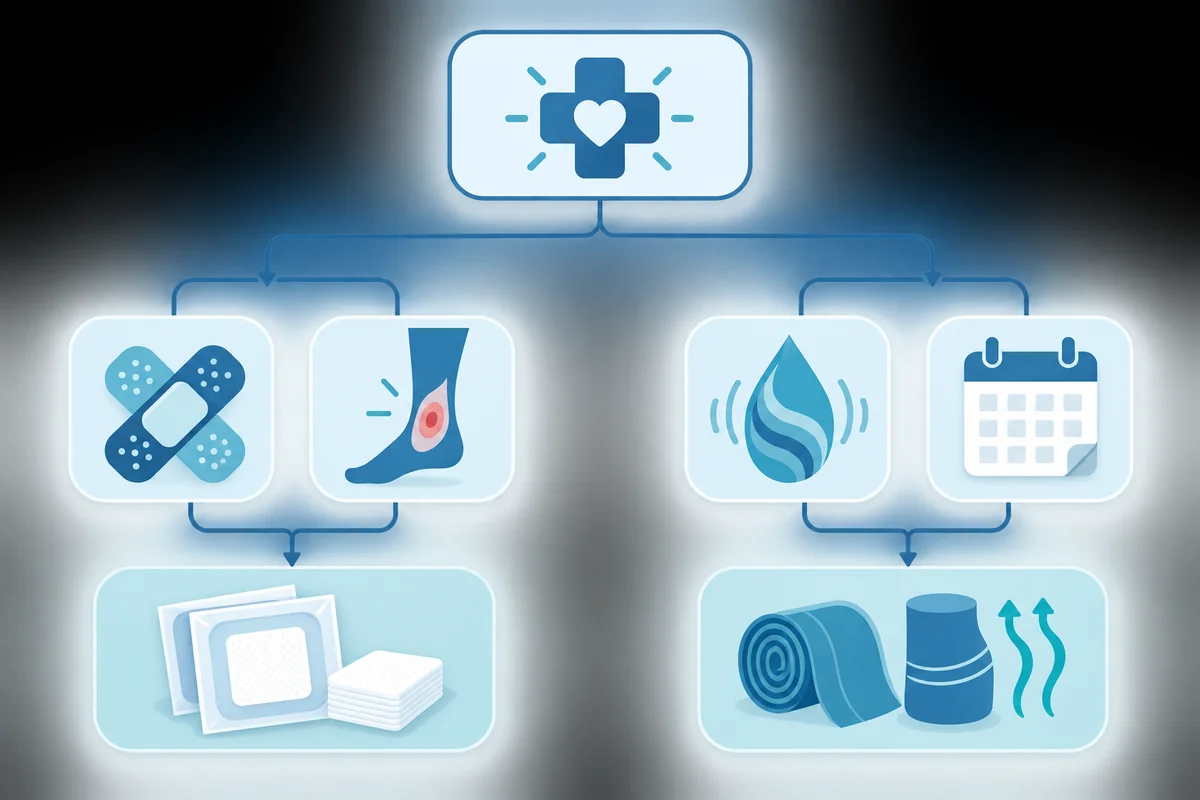
A venous stasis ulcer is an open wound on the lower leg caused by chronic venous insufficiency — damaged leg veins let blood pool, raising pressure in the skin until it breaks down. These ulcers are the one situation where Medicare has long covered gradient compression: as a surgical dressing applied while the ulcer is actively being treated.
The Surgical Dressings benefit is the Medicare Part B coverage category for dressings and related supplies needed to treat a qualifying wound. Compression garments qualify only when prescribed for an open venous stasis ulcer, billed with an active-ulcer diagnosis code, and supplied for the affected limb only — typically one garment at a time. (CMS Surgical Dressings Policy Article A54563)
The AW modifier is a two-letter billing code (“item used in conjunction with a surgical dressing”) that must be attached to claims for compression garments billed under the Surgical Dressings benefit. Without it, claims for A6531/A6532 under the ulcer pathway are typically denied automatically.
Payable codes in this pathway:
- A6531 — below-knee gradient compression stocking, 30–40 mmHg, used as a surgical dressing
- A6532 — thigh-length gradient compression stocking, 30–40 mmHg
- A6545 — non-elastic gradient compression wrap
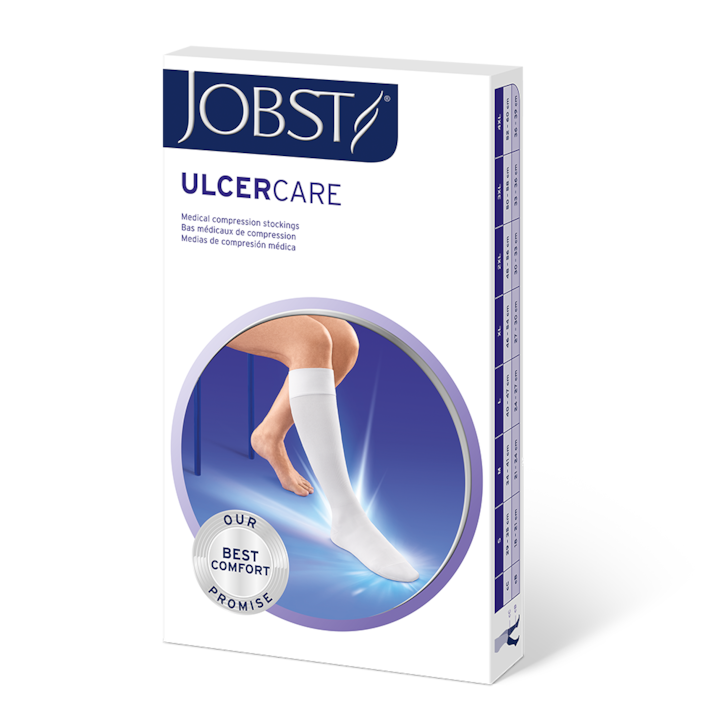
JOBST pathway mapping: the UlcerCare line (30–40 and 40–50 mmHg below-knee garments) is designed for ulcer management and fits the A6531 pathway when prescribed for an open stasis ulcer — available through our insurance billing program.
Pathway 2 — Lymphedema: The Lymphedema Treatment Act Benefit (New in 2024)
The Lymphedema Treatment Act is a federal law that added lymphedema compression treatment items to Medicare Part B under SSA §1861(s)(2)(JJ). For items furnished on or after January 1, 2024, Medicare covers medically necessary compression garments, bandaging systems, adjustable wraps, and accessories for people with diagnosed lymphedema — prescribed by a physician, NP, or PA and furnished by an enrolled DMEPOS supplier.
What’s covered under this benefit:
- Standard and custom-fitted gradient compression garments (daytime and nighttime)
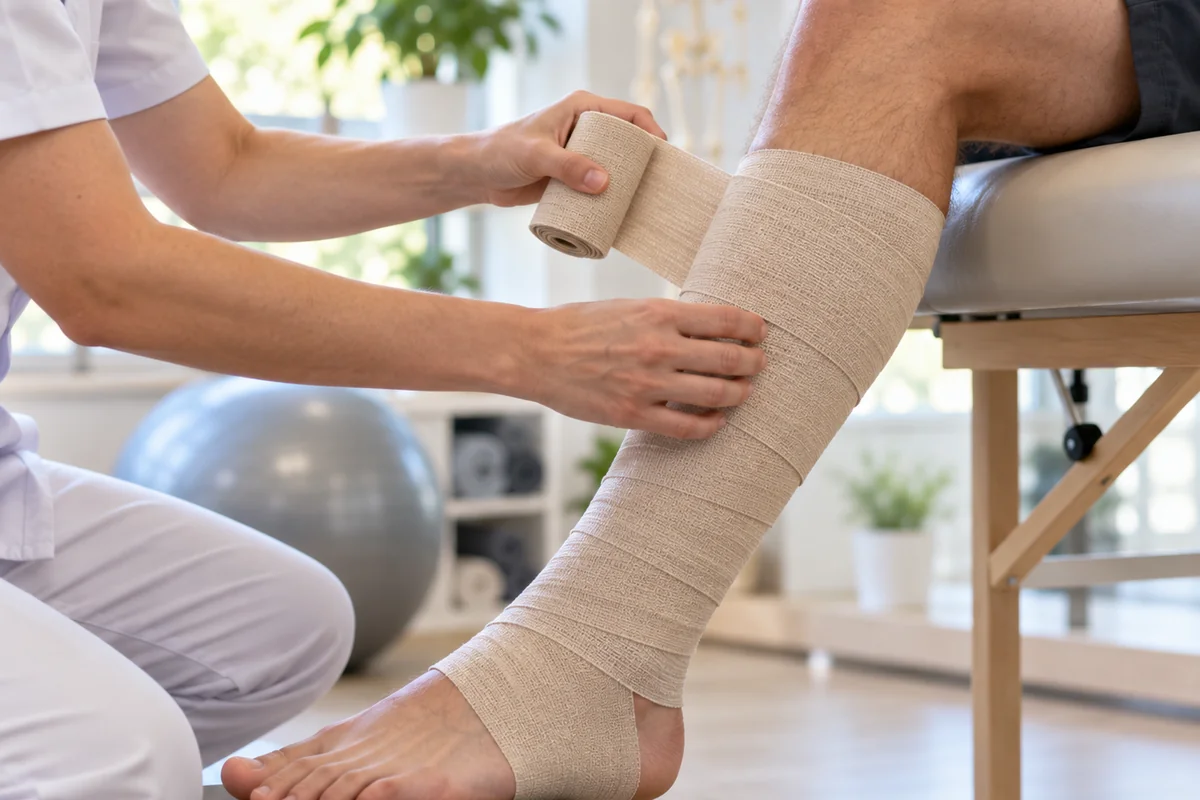
- Compression bandaging systems, such as short-stretch bandages (Comprilan)
- Adjustable-strap gradient compression wraps, code A6583 — the category FarrowWrap falls into
- Accessories: donning/doffing aids, fillers, lining, padding, and zippers — see our donning aids category
- Replacement for loss, damage, or limb-size change
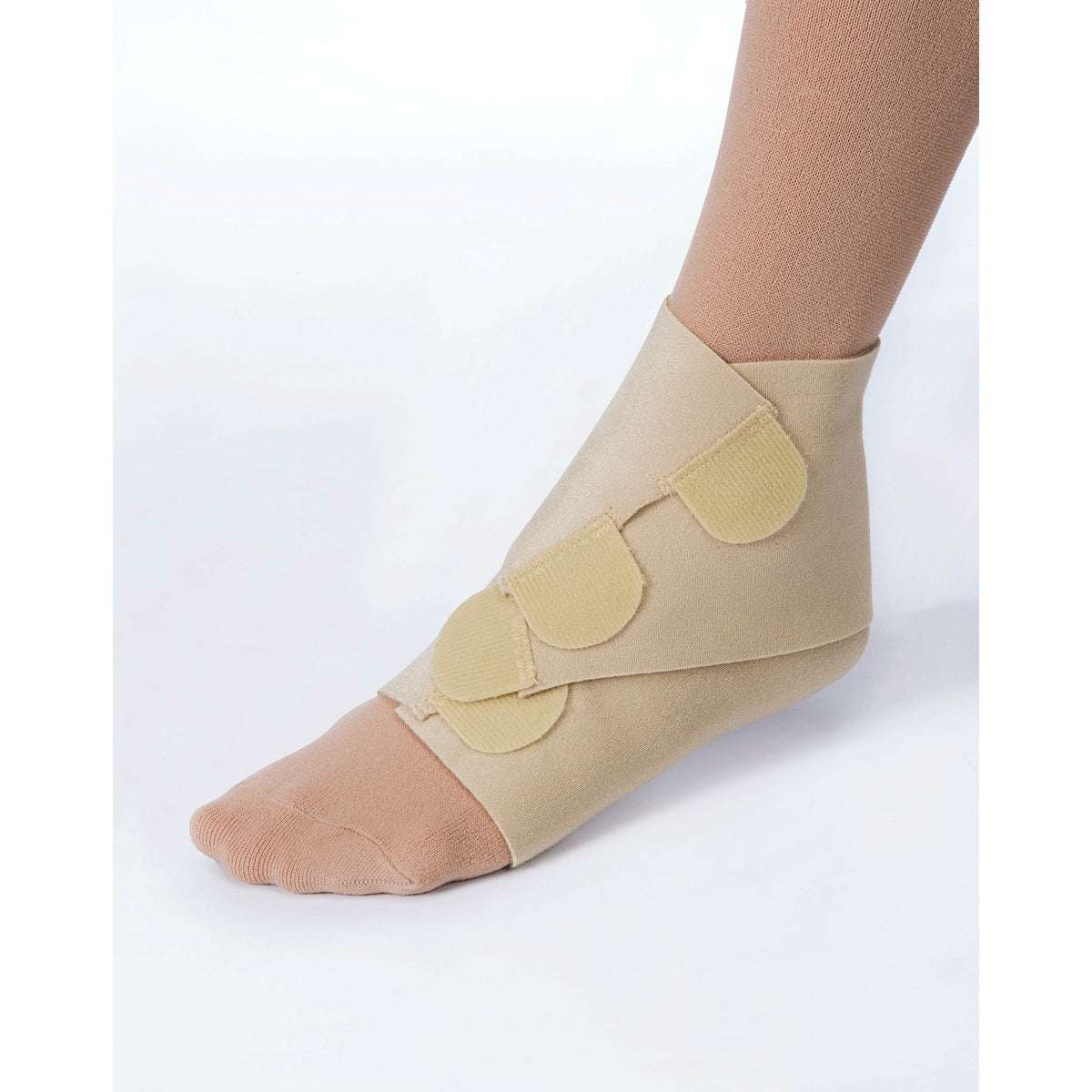
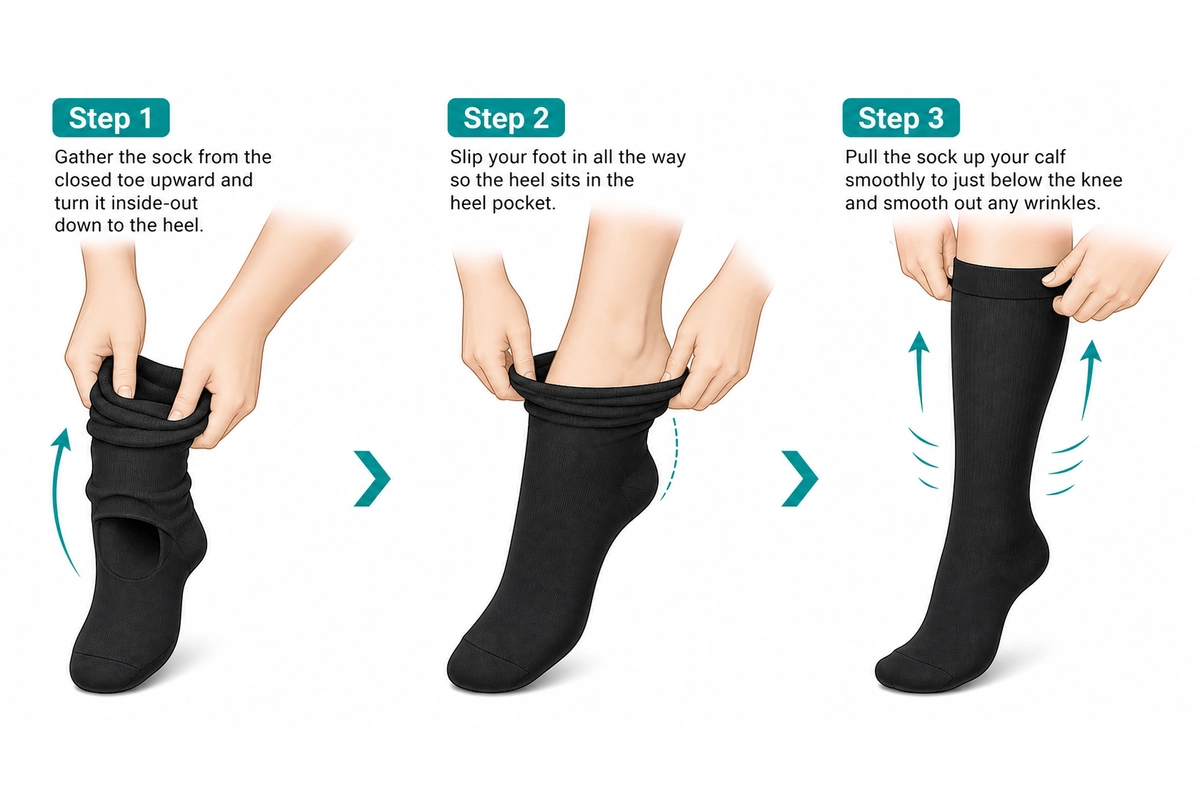
Frequency limits (callout): Medicare allows 3 daytime garments per affected body part per 6 months and 2 nighttime garments per affected body part per 2 years under the lymphedema benefit (CMS Lymphedema Compression Treatment Items guidance).
Common billing mistake: A6531 and A6545 are not payable under the lymphedema benefit — they belong to the ulcer pathway (per Noridian’s Lymphedema FAQs). Pathway and code selection matter, and mixing them up is a leading cause of denials.
Want Medicare-only detail? Read our companion guide: Does Medicare cover compression stockings? (deep dive on Medicare rules, costs, and appeal rights).
What HCPCS Codes Are Used for Compression Stockings?
Compression garments are billed with HCPCS Level II codes: A6531–A6532 for below-knee/thigh-length 30–40 mmHg garments used as surgical dressings, A6545/A6583 for adjustable wraps, and A6552–A6558/A6581–A6583 for lymphedema garments including arm sleeves. Correct code choice depends on the coverage pathway — and wrong codes are the #1 denial reason.
HCPCS Level II is the standardized coding system Medicare and insurers use for durable medical equipment, supplies, and non-physician services. Each code maps to a specific item description and fee schedule amount, and using the wrong code — or the right code under the wrong benefit — will usually trigger an automatic denial. Garments later billed with RT (right) or LT (left) modifiers to identify the affected limb, per PDAC correct-coding guidance.
| Code | Description | Coverage Pathway | AW Modifier? | RT/LT Note |
|---|---|---|---|---|
| A6531 | Below-knee gradient compression, 30–40 mmHg (surgical dressing) | Ulcer / Surgical Dressings | Yes — required | Bill with RT or LT |
| A6532 | Thigh-length gradient compression, 30–40 mmHg | Ulcer / Surgical Dressings | Yes — required | Bill with RT or LT |
| A6545 | Gradient compression wrap, non-elastic | Ulcer / Surgical Dressings | Yes — required | Bill with RT or LT |
| A6583 | Gradient compression wrap, adjustable straps, 30–50 mmHg, below-knee | Lymphedema Treatment Act | No | Bill with RT or LT |
| A6552–A6558 | Lymphedema gradient compression garments (daytime, standard/custom) | Lymphedema Treatment Act | No | Per PDAC code specificity |
| A6581–A6582 | Lymphedema compression bandaging systems / nighttime garments | Lymphedema Treatment Act | No | Per PDAC code specificity |
Sources: CMS Surgical Dressings Policy Article A54563 · CMS Transmittal R12471CP · PDAC Correct Coding
What Diagnosis Codes (ICD-10) Support Coverage?
Coverage documentation requires an ICD-10 diagnosis tied to the covered indication: L97.x for venous stasis ulcers, I83.x for varicose veins with ulcer, I87.2 for chronic venous insufficiency with ulcer, and I89.0 / I97.2 for lymphedema, including post-mastectomy lymphedema. Prevention, travel, and cosmetic use have no billable diagnosis code.
| ICD-10 | Condition | Pathway It Supports |
|---|---|---|
| L97.x series | Non-pressure chronic ulcer of lower limb (venous stasis ulcer) | Surgical Dressings (ulcer) |
| I83.x series | Varicose veins with ulcer | Surgical Dressings (ulcer) |
| I87.2 | Chronic venous insufficiency with ulcer | Surgical Dressings (ulcer) |
| I89.0 | Lymphedema, not elsewhere classified | Lymphedema Treatment Act |
| I97.2 | Postmastectomy lymphedema syndrome | Lymphedema Treatment Act |
Sources: CMS MM13286 · Noridian Lymphedema FAQs
What Documentation Do You Need for Insurance to Pay?
You typically need four things: a prescription from a physician, NP, or PA; the treating provider’s NPI; clinical documentation of the qualifying condition (active ulcer or diagnosed lymphedema); and, for custom garments, professional measurements of the affected limb. Suppliers may also require a Certificate of Medical Necessity.
Physician Prescription
A written order from a physician, nurse practitioner, or physician assistant naming the garment type, compression level, and diagnosis. For Medicare’s lymphedema benefit, the prescription is mandatory — no order, no coverage.
Clinical Notes and Diagnosis Documentation
Office or therapy notes documenting the qualifying condition: wound-care notes showing an active ulcer, or a lymphedema diagnosis in the chart (often supported by a therapist’s limb-volume measurements). Insurers match these notes to the ICD-10 on the claim.
Limb Measurements for Custom and Lymphedema Garments
Custom and many lymphedema garments are made to your exact limb measurements. Tip: measure in the morning, when swelling is lowest, for the most accurate fit — the same guidance we give for all JOBST sizing.
Step-by-Step: How to Get Your JOBST Stockings Billed to Insurance
Verify coverage first, then get a prescription and diagnosis documentation, confirm your supplier bills insurance, submit measurements, and let the supplier bill your payer. Most claims process in 2–4 weeks. Our team can verify your benefits before you order — free, no obligation.
- Check your coverage — start with our free coverage-check form (about 2 minutes, no obligation).
- Get a prescription + diagnosis documentation from your physician, NP, or PA.
- Confirm the garment matches a covered pathway and code (ulcer pathway: A6531-class; lymphedema: LTA codes).
- Get measured for custom or lymphedema garments — ideally in the morning.
- Submit everything via the coverage-check form or by phone.
- We verify benefits and confirm your expected out-of-pocket cost before anything is billed.
- The supplier bills your insurance; you pay any remaining deductible or coinsurance.
- If denied — check the denial-fix table below, then resubmit or appeal.
Typical total time from first step to garment in hand: about 14 days.
What Will You Pay Out of Pocket?
If covered by Original Medicare, you pay the Part B deductible ($283 in 2026, per CMS) plus 20% coinsurance on the approved amount; secondary insurance may cover that share. Self-pay compression stockings typically run $40–$150+ depending on class. HSA and FSA funds can be used either way.
| Situation | Path | Typical Patient Cost | Notes |
|---|---|---|---|
| Covered by Original Medicare | Part B deductible + 20% coinsurance | $283 deductible (2026) + 20% of approved amount | Secondary insurance may cover the 20% |
| Covered by private plan | Plan DME benefits | Deductible/copay per plan; sometimes $0 | Verify limits before ordering |
| Self-pay | Direct purchase | Typically $40–$150+ per garment | HSA/FSA eligible; everyday 15–20 mmHg lines like [Relief](/product-category/relief/), [UltraSheer](/product-category/ultrasheer/), and [For Men](/product-category/for-men/) are common self-pay choices |
Deductible figure: CMS 2026 Medicare Parts A & B Premiums and Deductibles fact sheet.
What If Your Insurance Denies the Claim? Common Denials and Fixes
The most common denials are wrong code for the pathway (e.g., A6531 billed under the lymphedema benefit), missing AW modifier, no active-ulcer documentation, exceeding frequency limits, or using a supplier not enrolled in Medicare. Most are fixable with a corrected claim or appeal.
| Denial Reason | Why It Happens | How to Fix It |
|---|---|---|
| Wrong code for the pathway | A6531/A6545 billed under the lymphedema benefit (not payable there) | Rebill with the correct LTA code for the lymphedema pathway |
| Missing AW modifier | Ulcer-pathway claim billed without the surgical-dressing modifier | Submit a corrected claim with the AW modifier |
| No active-ulcer documentation | Chart notes don’t show an open, qualifying ulcer | Obtain wound-care notes tying ICD-10 L97.x/I83.x/I87.2 to the claim |
| Frequency limit exceeded | More garments than allowed per period (3/6 mo daytime; 2/2 yr nighttime) | Wait for the new period or request an exception with documentation |
| Supplier not enrolled | Garment from a supplier not enrolled as a DMEPOS provider | Use an enrolled supplier — verify before ordering |
| Non-covered use case | Prevention, travel, or cosmetic use has no covered diagnosis | Self-pay with HSA/FSA, or explore a private-plan benefit |
Can Clinics, Lymphedema Therapists, and Providers Bill for Compression Garments?
Yes — but the garments must be furnished by a Medicare-enrolled DMEPOS supplier, and donning education is bundled into the supplier’s payment. Clinics typically refer patients to an enrolled supplier rather than billing directly. Our insurance billing program supplies billable JOBST lines to eligible patients.
[Supplier credentialing — verified September 23, 2026] Pro Therapy Supplies, LLC is a Medicare-enrolled DME supplier (NPI 1497995971), Norcross, GA — verifiable through the CMS NPI Registry (npiregistry.cms.hhs.gov). Our billing team verifies each patient’s coverage before anything is billed, so there are no surprise bills. You can confirm supplier and coverage details through the coverage-check form or by asking the team directly.
Therapists and clinics: if your patients need billable gradient compression, refer them to the coverage-check form and we’ll handle verification, coding, and billing coordination.
Frequently Asked Questions
Does Medicare cover compression stockings for varicose veins?
Generally no — not for varicose veins without an open ulcer, and not for prevention or travel. Medicare covers compression garments only through the Surgical Dressings benefit (active venous stasis ulcer, A6531/A6532 + AW modifier) or the Lymphedema Treatment Act benefit for diagnosed lymphedema, effective January 1, 2024.
What is the AW modifier and when is it required?
The AW modifier is a billing code meaning “item used in conjunction with a surgical dressing.” It’s required on claims for compression garments billed under Medicare’s Surgical Dressings benefit for venous stasis ulcers (A6531, A6532, A6545). Without it, the claim is typically denied automatically.
How many compression garments does Medicare cover per year?
Under the lymphedema benefit: 3 daytime garments per affected body part per 6 months, and 2 nighttime garments per affected body part per 2 years, plus replacements for loss, damage, or size change. Under the ulcer pathway, coverage is typically one garment at a time for the affected limb.
Does the Lymphedema Treatment Act cover donning aids?
Yes. CMS explicitly lists accessories — donning and doffing aids, fillers, lining, padding, and zippers — as covered lymphedema compression treatment items when furnished with the covered treatment. This is one of the most overlooked parts of the 2024 benefit.
Will my private insurance cover 20–30 mmHg compression stockings?
Often, yes — most commercial plans (BCBS, Aetna, Cigna, UHC, Humana) may cover 20–30+ mmHg gradient compression with a prescription and a documented diagnosis. Policies vary by plan, so verify your specific benefits before ordering; 20 mmHg and above is generally a clinical decision.
What do I do if my compression stocking claim is denied?
First, read the denial reason code on your Explanation of Benefits. Most denials — wrong code for the pathway, missing AW modifier, or missing ulcer documentation — are fixable with a corrected claim. If the denial stands, you have the right to appeal; your supplier can help resubmit with corrected documentation.
Can I use HSA or FSA funds to buy compression stockings?
Yes. Compression stockings purchased with a prescription are generally HSA/FSA-eligible medical expenses, and many plans accept them even for self-pay purchases. Keep your receipt and prescription for reimbursement. Check your plan’s specific rules.
Do I need a prescription for compression stockings?
For insurance billing, yes — a prescription from a physician, NP, or PA is required for Medicare coverage and for most private-plan coverage. For mild everyday compression (8–20 mmHg) bought out of pocket, no prescription is needed, though we recommend consulting your provider about the right level.
Ready to Check Your Coverage?
The safest first step costs nothing: submit our insurance coverage-check form and our billing team will verify your benefits, confirm the correct pathway and codes, and tell you your expected out-of-pocket cost before anything is billed. No obligation.
Your privacy: information you submit through the coverage-check form is handled per our privacy policy and used only to verify your benefits and respond to your request. It is not sold or shared for marketing.
Not sure you need a billable garment? Browse the UlcerCare line
to see the JOBST ulcer-management garments available through our insurance billing program, or explore ready-to-wear compression for everyday options.
Related Resources
- Does Medicare cover compression stockings? — Medicare-only deep dive (companion guide)
- Insurance coverage hub & verification form
- UlcerCare compression garments
- FarrowWrap adjustable wraps
- Donning aids & accessories
About Pro Therapy Supplies
Pro Therapy Supplies is an authorized JOBST reseller. JOBST is a compression-therapy brand of Essity / BSN medical; JOBST and product-line names are trademarks of their owner. This site sells genuine JOBST garments and coordinates insurance billing for eligible patients through our insurance billing program.
This content is for educational and informational purposes only. It is not a substitute for professional medical advice, diagnosis, or treatment. Always consult your healthcare provider before starting any new treatment. Coverage policies change; figures reflect 2026 Medicare rules as of the publication date. This content has not been reviewed by a licensed healthcare professional.
Sources: CMS — Lymphedema Compression Treatment Items · CMS Transmittal R12471CP · CMS MM13286 · CMS Surgical Dressings Policy Article A54563 · CMS 2026 Premiums & Deductibles Fact Sheet · Noridian Lymphedema FAQs · PDAC Correct Coding