
15-20 vs 20-30 mmHg Compression Stockings: Which Level Do You Need?
By Sean Tang
Published: November 10, 2026 | Last reviewed: September 1, 2026
Medical disclaimer: This content is for educational purposes only and does not replace professional medical advice. Always consult a healthcare provider before starting compression therapy, especially at 20 mmHg or higher or if you have arterial disease, diabetes, or neuropathy. This content has not been reviewed by a licensed healthcare professional.
Choose 15–20 mmHg for prevention, mild leg fatigue, travel, pregnancy, and all-day comfort. Step up to 20–30 mmHg for moderate varicose veins, post-sclerotherapy recovery, or persistent end-of-day swelling. Both levels may help reduce occupational edema, but 20–30 mmHg provides stronger support. Compression at 20 mmHg or higher is generally a clinical decision—consult a healthcare provider.
What does mmHg mean in compression stockings?
mmHg measures compression garment pressure in millimeters of mercury. A 15–20 mmHg stocking delivers moderate pressure; 20–30 mmHg delivers firmer, medical-grade Class I pressure.
Graduated compression means the stocking is tightest at the ankle and looser toward the calf or thigh, helping push blood and fluid upward toward the heart.
Venous insufficiency occurs when leg veins struggle to return blood to the heart, causing heaviness, aching, visible varicose veins, and ankle swelling.
Edema is swelling caused by fluid buildup in body tissues. In the legs, it often appears as puffy ankles or tight calves after long periods of sitting or standing.
What is the difference between 15-20 and 20-30 mmHg compression stockings?
The difference is pressure strength. 15–20 mmHg is moderate compression for prevention and mild symptoms, while 20–30 mmHg is firm, medical-grade Class I compression for moderate venous issues. A 2018 study found both reduced occupational edema, but 20–30 mmHg produced greater reductions.
| Feature | 15–20 mmHg (Moderate) | 20–30 mmHg (Firm / Class I) |
|---|---|---|
| Best for | Prevention, mild fatigue, travel, pregnancy, first-time users | Moderate varicose veins, post-sclerotherapy, moderate edema, DVT risk as advised |
| Typical symptoms | Tired legs, mild ankle swelling, spider veins | Persistent swelling, visible varicose veins, heavy legs, post-procedure recovery |
| Compression feel | Gentle, easy to wear all day | Firmer, noticeable support, may take adjustment |
| Prescription | Usually over-the-counter | Often OTC, but clinician guidance is recommended |
| Clinical framing | Wellness/prevention | Medical-grade; consult provider for PAD, diabetes, neuropathy |
| Common JOBST lines | Relief, UltraSheer, Opaque, ActiveWear, Sport, forMen Ambition | Relief, UltraSheer, Opaque, ActiveWear, forMen Ambition |
For more on compression classes, see how to choose compression stockings.
Who should wear 15-20 mmHg compression stockings?
15–20 mmHg is ideal for tired, achy legs after standing or sitting, mild ankle swelling, frequent travelers, pregnant people with mild swelling, and first-time compression users.
Common use cases:
- Long days on your feet or at a desk
- Travel, flights, and road trips
- Pregnancy-related mild leg swelling
- First-time compression wearers
- Mild spider or varicose veins
JOBST 15–20 mmHg options include Relief, UltraSheer, Opaque, ActiveWear, Sport, and forMen Ambition.
15–20 mmHg is not a treatment for diagnosed venous disease. If symptoms persist or worsen, talk with a healthcare provider.
Can 15-20 mmHg help with pregnancy swelling?
Yes—many pregnant people find 15–20 mmHg helps reduce mild leg swelling. For significant or sudden swelling, a clinician may recommend 20–30 mmHg. Explore our maternity compression stockings guide, or browse maternity garments.
Who should wear 20-30 mmHg compression stockings?
20–30 mmHg is appropriate for moderate varicose veins, persistent edema, chronic venous insufficiency, post-sclerotherapy or post-ablation recovery, and DVT risk reduction when recommended by a clinician.
Typical indications:
- Moderate varicose veins or chronic venous insufficiency
- Persistent edema that 15–20 mmHg does not control
- Post-sclerotherapy or post-ablation recovery
- Higher-risk travel or post-surgical immobility — only with clinician advice
JOBST 20–30 mmHg options include Relief, Opaque, UltraSheer, ActiveWear, and forMen Ambition.
Is 20-30 mmHg used after sclerotherapy?
Yes. Clinical practice guidelines commonly recommend at least 20–30 mmHg compression after sclerotherapy or ablation. JOBST Opaque or Relief knee-highs are practical post-procedure options.
Is 15-20 mmHg enough for varicose veins and swelling?
For mild or early varicose veins and light end-of-day swelling, 15–20 mmHg is often enough. For moderate or persistent varicose veins, visible bulging veins, or swelling that does not improve, 20–30 mmHg is typically more appropriate and should be discussed with a clinician.
The NHLBI describes compression therapy as elastic stockings or bandages that put gentle pressure on the legs to help prevent swelling and relieve varicose vein symptoms.
Step-up protocol:
- Start with 15–20 mmHg for 2–4 weeks if symptoms are mild.
- Monitor end-of-day ankle swelling and comfort.
- Move to 20–30 mmHg if swelling rebounds or varicose veins become more noticeable.
Can I wear 20-30 mmHg compression stockings without a prescription?
20–30 mmHg stockings are often sold over the counter, but choosing 20 mmHg or higher is generally a clinical decision—especially if you have diabetes, peripheral arterial disease, neuropathy, or a history of blood clots. Contraindications include PAD, uncontrolled heart failure, severe neuropathy, and certain skin conditions.
Safety note: Compression at 20 mmHg or higher is generally a clinical decision. Seek medical clearance before use if you have diabetes, PAD, neuropathy, or uncontrolled heart failure.
15-20 vs 20-30 mmHg for travel, work, pregnancy, and post-sclerotherapy

For travel and standing work, 15–20 mmHg is usually sufficient for prevention. For seated work with significant leg swelling, pregnancy with pronounced edema, or post-sclerotherapy recovery, 20–30 mmHg is often the better choice.
- Standing all day — 15–20 mmHg ActiveWear or Relief for mild fatigue; 20–30 mmHg if ankles swell visibly.
- Flights and road trips — 15–20 mmHg for most travelers; 20–30 mmHg only with clinician guidance.
- Pregnancy — Mild swelling often responds to 15–20 mmHg. Significant or sudden edema needs clinician evaluation.
- Post-sclerotherapy — 20–30 mmHg is commonly recommended after superficial vein procedures.
How do I choose the right JOBST line for my compression level?
Match your lifestyle and symptom severity to the JOBST line. Relief is the entry-level value option, UltraSheer is sheer and office-appropriate, Opaque is durable and matte, ActiveWear and Sport are cushioned and moisture-wicking, and forMen Ambition is designed for men’s dress and casual wear.
| Compression Level | Recommended JOBST Lines |
|---|---|
| 15–20 mmHg | Relief, UltraSheer, Opaque, ActiveWear, Sport, forMen Ambition |
| 20–30 mmHg | Relief, Opaque, UltraSheer, ActiveWear, forMen Ambition |
A useful upgrade path: UltraSheer, Opaque, and ActiveWear also offer 30–40 mmHg.
When should I step up from 15-20 to 20-30 mmHg?
Step up when 15–20 mmHg no longer controls your symptoms. Red flags include persistent end-of-day ankle swelling, rebound edema by midday, increasing varicose vein visibility, or a clinician recommending firmer compression.
A practical step-up checklist:
- Swelling returns before the end of the day
- Varicose veins worsen or become painful
- Discomfort interferes with activity or sleep
- A clinician recommends 20+ mmHg
- You are recovering from sclerotherapy or vein ablation
Do not self-escalate if you have peripheral arterial disease, diabetes, neuropathy, or uncontrolled heart failure. Ask a clinician whether 20–30 mmHg is safe and whether an ABI test is needed.
What are the safety notes and contraindications for compression stockings?
Graduated compression is not appropriate for everyone. People with peripheral arterial disease, uncontrolled heart failure, severe neuropathy, certain skin conditions, or diabetes without medical clearance should avoid 20+ mmHg or consult a clinician first. Always get an ABI check or medical advice before using firm compression.
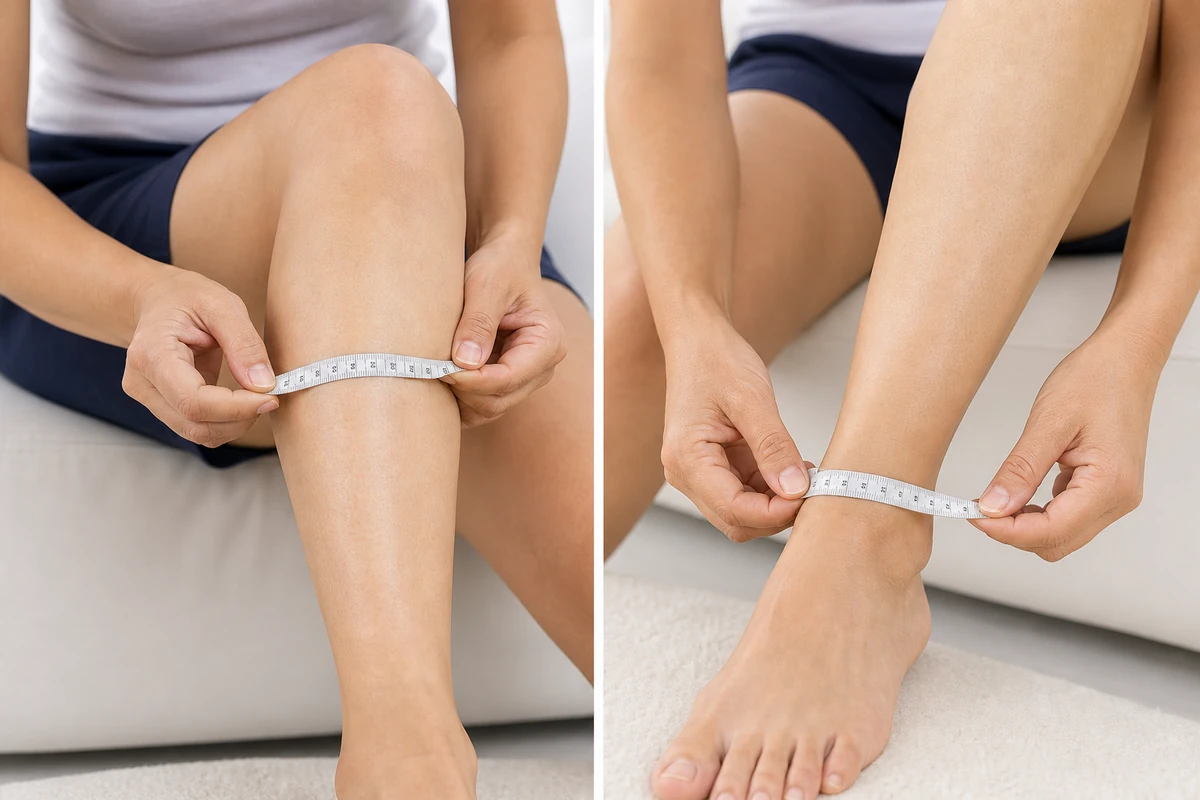
Signs a stocking may be too tight include numbness, tingling, pale or cold toes, new pain, or skin irritation. If you notice any of these, remove the stocking and contact a healthcare provider. Proper measuring—typically done in the morning—helps reduce these risks.
Frequently asked questions
What is the difference between 15-20 and 20-30 mmHg compression stockings?
15–20 mmHg is moderate compression for prevention and mild symptoms; 20–30 mmHg is firm, medical-grade Class I compression for moderate venous issues.
Who should wear 15-20 mmHg compression stockings?
People with mild leg fatigue, light ankle swelling, frequent travel, pregnancy-related swelling, or those new to compression often do well with 15–20 mmHg.
Who should wear 20-30 mmHg compression stockings?
20–30 mmHg is commonly used for moderate varicose veins, persistent edema, chronic venous insufficiency, post-sclerotherapy recovery, and DVT-risk reduction when advised by a clinician.
Is 15-20 mmHg enough for varicose veins?
For mild or early varicose veins, 15–20 mmHg may relieve discomfort. For moderate or bulging varicose veins, 20–30 mmHg is usually more appropriate and should be discussed with a healthcare provider.
Can I buy 20-30 mmHg compression stockings without a prescription?
Yes, 20–30 mmHg stockings are often sold over the counter. However, 20 mmHg or higher is generally a clinical decision, especially if you have diabetes, peripheral arterial disease, neuropathy, or a history of blood clots.
When should I step up from 15-20 to 20-30 mmHg?
Step up if 15–20 mmHg no longer controls end-of-day swelling, varicose veins become more visible, or a clinician recommends firmer compression.
Are there safety risks with 20-30 mmHg compression stockings?
Graduated compression is not appropriate for everyone. People with peripheral arterial disease, uncontrolled heart failure, severe neuropathy, or certain skin conditions should seek medical clearance before using 20–30 mmHg compression.
Which JOBST line is best for each compression level?
For 15–20 mmHg, try JOBST Relief, UltraSheer, Opaque, ActiveWear, Sport, or forMen Ambition. For 20–30 mmHg, Relief, Opaque, UltraSheer, ActiveWear, and forMen Ambition all offer firm support.
Product recommendations
- Mild fatigue or travel → Relief 15–20 mmHg or UltraSheer 15–20 mmHg
- Moderate varicose veins or swelling → Opaque 20–30 mmHg or Relief 20–30 mmHg
- Post-procedure recovery → Relief or Opaque knee-highs in 20–30 mmHg
- Athletic recovery → ActiveWear and Sport
- Men’s wear → forMen Ambition
- Pregnancy → maternity compression stockings guide or maternity garments
References
- Quilici Belczak CE, et al. Comparison of 15–20 mmHg versus 20–30 mmHg Compression Stockings in Reducing Occupational Oedema in Standing and Seated Healthy Individuals. Int J Vasc Med. 2018;PMCID: PMC6188858 / PubMed 30364041. https://pubmed.ncbi.nlm.nih.gov/30364041/
- Mosti G, Benigni JP, Caggiati A. What is the recommended compression pressure for different clinical indications? Phlebology. 2025. https://journals.sagepub.com/doi/10.1177/02683555251410002
- American Venous Forum / SVS / ACP. Compression therapy after invasive treatment of superficial veins of the lower extremities: Clinical practice guidelines. PubMed 30554745. https://pubmed.ncbi.nlm.nih.gov/30554745/
- CDC — Venous Thromboembolism (Blood Clots). https://www.cdc.gov/blood-clots/about/index.html
- CDC Travel — DVT. https://wwwnc.cdc.gov/travel/page/dvt
- NHLBI — Varicose Veins. https://www.nhlbi.nih.gov/health/varicose-veins
- NHLBI — Preventing Blood Clots. https://www.nhlbi.nih.gov/health/venous-thromboembolism/preventing-blood-clots
- MedlinePlus — Compression stockings patient instructions. https://medlineplus.gov/ency/patientinstructions/000597.htm
- Müller-Böhm S, et al. Safety of medical compression stockings in patients with diabetes mellitus or peripheral arterial disease. PubMed 32503811. https://pubmed.ncbi.nlm.nih.gov/32503811/

Written by Sean Tang
Founder of Pro Therapy Supplies and JOBST Compression Stocking. Medicare-enrolled DME supplier with 20+ years experience helping patients navigate insurance coverage for compression therapy and home medical equipment.